The softwareyour businessruns on.
CimaTech builds the systems a business runs its money through. Custom ERPs, inventory and logistics systems, tax and filing tools, and invoice automation. You work directly with the engineers who write every line.
// shipped: a PFIC tax analysis tool for a US CPA firm, and a free-zone trading ERP a distributor runs on daily.
or book a 15-minute call on WhatsApp and tell us what the problem is costing you.
The systems we build.
Custom ERPs
One system for the whole operation: stock, clients, orders, invoicing and the reporting on top. It replaces the spreadsheet sprawl your team fights every day, and it is built on your rules rather than a vendor's.
Inventory & Logistics
Know what landed, what it actually cost once freight and customs are spread across it, and what is left on the floor. Stock that moves the moment a sale or a receipt happens, not the next morning.
Tax & Filing Tools
The rules written down as code: the tests, the thresholds and the forms they route to, applied the same way every time. Workpapers and filings come out the other end, with the judgment calls left to the preparer.
Invoice & Workflow Automation
The re-typing between systems, done by software. Invoices raised from the order, portals filed by a robot, data pushed between the tools you already pay for, so your staff stops being the integration.
One partner.
Every layer.
Frontend, backend and automation, architected as a single system.
scroll → to traverse modules
Script your project.
Everything we build is made of the same blocks. An automation is one job. An internal tool is a few of them with screens and data around them. A whole system is several tools working as one. Stack what you need and watch it move through our pricing table.
Automations and tools are priced as if each were the whole project. Built together they share a database, login and hosting, so every one after the largest adds less than its own row. Rows with a plus sign add in full.
$1,900USD
4 weeks
Automation build
from $600
Internal tool
from $1,500
Custom system
from $3,500
Priced like an internal tool. Those typically run 3 to 5 weeks.
$1,600 more scope makes it a custom system.
// your build
An estimate, not a quote. The fixed price comes after the call, before any work begins.
Shipped systems.
Three systems people run their day on, all three linked below. The ERP opens on a login screen, so here is an account of what is behind it.
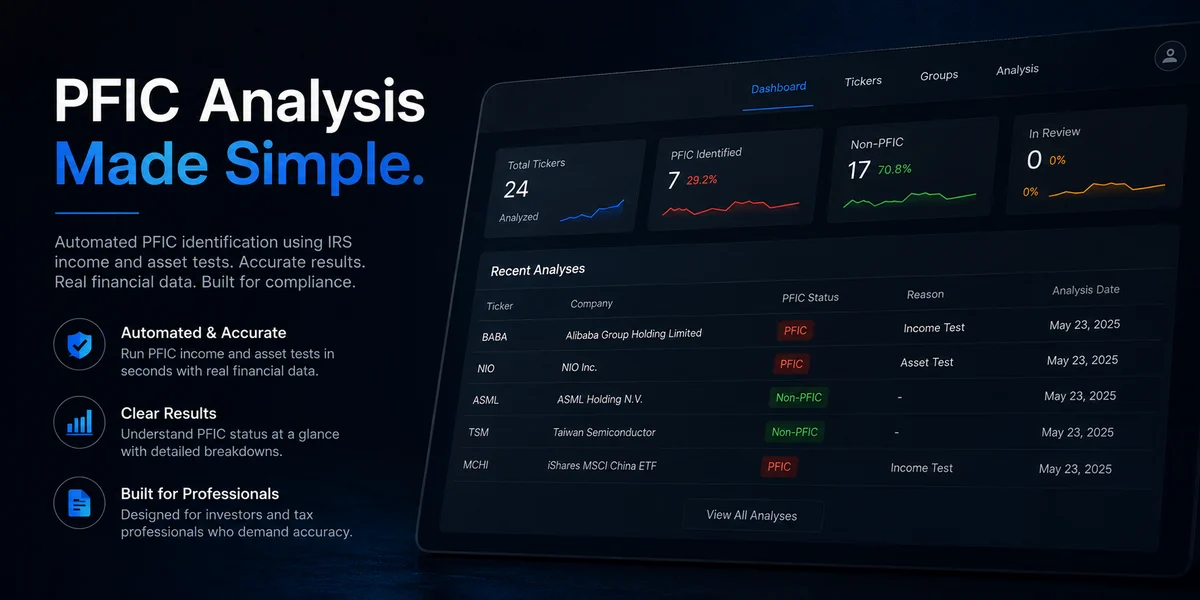
SaaS · built for a US CPA firm
PFIC-Analyzer
Live in production · metered by credits
A US taxpayer holding a foreign fund has to prove, year by year, whether it counts as a PFIC, then file a Form 8621 for each one. The firm was doing that by hand, one spreadsheet per client. This runs it off the transaction ledger instead.
- engine
- The 75% income test and the 50% asset test, plus the country test, fund-domicile presumption and the §1298(b) exceptions. One verdict per ticker per year, with a preparer override on top.
- workpapers
- FIFO lot roll-forward for holding periods, §1291(b) excess-distribution math, and Form 8621 Parts I to V routed automatically. Exports to CSV, PDF and Markdown.
- imports
- Broker CSVs or a live brokerage connection through SnapTrade. Market fundamentals, prices and year-end valuations are proxied through Cloud Functions, cached and rate-limited, never called from the browser.
- billing
- Stripe checkout with coupons and pay-later invoicing across three products. The webhook grants credits; balances are server-side only and no client can write to them.
- judgment
- Mergers and spin-offs the engine cannot classify go to a review queue rather than a guess. Three regression suites pin the tax math, and a green run gates every deploy.
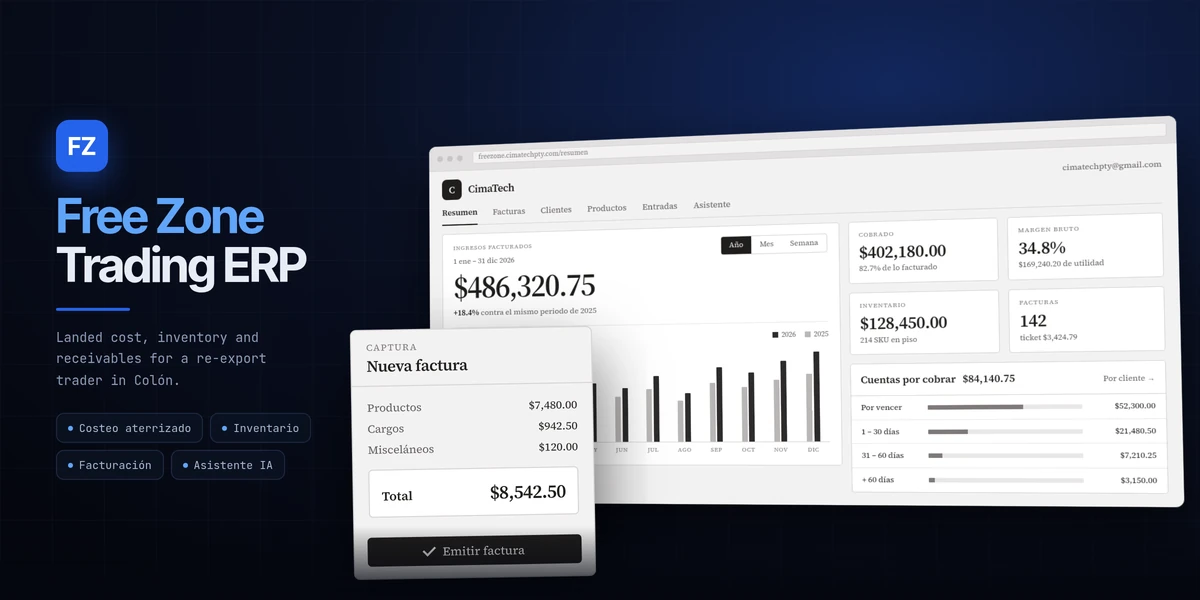
ERP · re-export trader, Colón Free Zone
Free Zone Trading ERP
Replacing a legacy system, catalogue first
Goods arrive by the container, and the freight, handling and customs charges land on separate invoices weeks later. Until those are spread over the merchandise nobody knows what a carton actually cost, so nobody knows what the sale actually earned. This puts the landed cost on the line at the moment the goods are received.
- costing
- The freight, handling and customs bills show up weeks after the container does. Enter them once and every carton on that shipment carries its true cost, so quotes come off what the goods actually cost instead of off the supplier's invoice and a guess.
- stock
- One stock figure the whole company works from. Selling, receiving and adjusting all move it the moment they happen, so the warehouse and the office stop arguing about what is on the floor.
- invoicing
- Close the sale and the invoice, the packing list and the entry costing come out of the same screen. Nothing gets re-typed into a second system, and every total is exact to the cent on screen and on paper.
- receivables
- Who owes what, how long it has been sitting, and how much of the year has actually been collected. It is on the front page, so chasing money stops depending on someone remembering to build a report.
- migration
- Catalogue, clients and open invoices come across from the old system on a spreadsheet, with the templates provided. You see exactly what will be created, skipped or rejected before anything is saved, and the invoices keep their original dates, so day one starts with real balances instead of a blank system.
- assistant
- Ask in plain Spanish what a client owes or what is left of a SKU and get the answer, no report to build and nothing to learn. It only reads, and the numbers it gives back are the same ones on the screen.
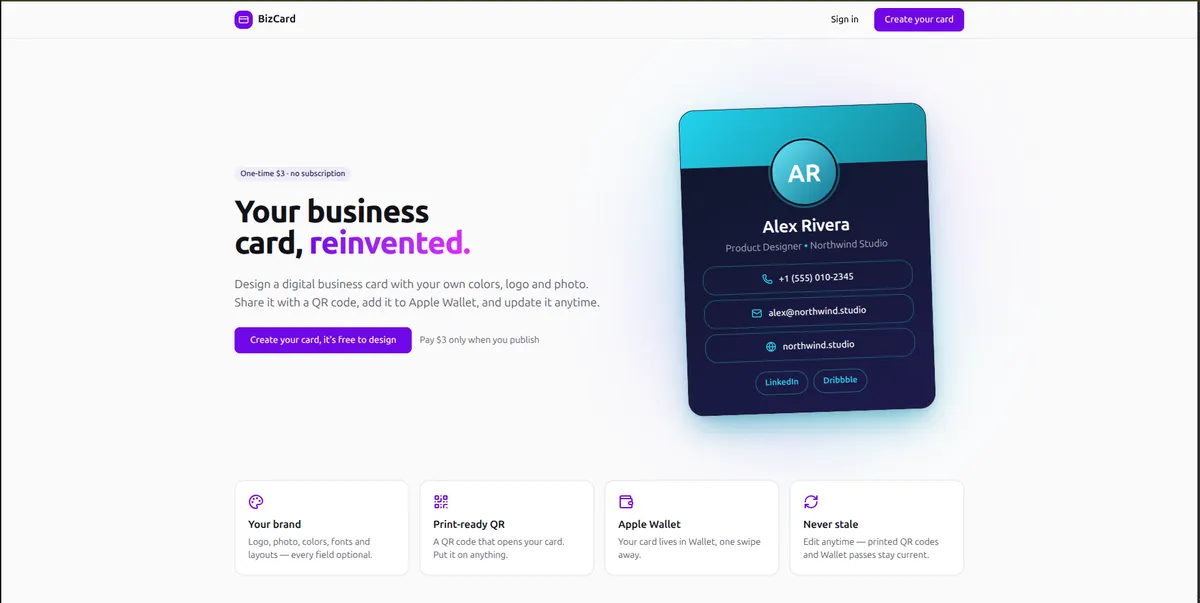
SaaS · digital business cards
BizCard
Design free · $3 to publish
Build a card, see it live, pay only when you want the public link. The whole product runs on edge functions, so there is no server to keep alive between customers.
- the card
- A public page per card with a vCard download and a print-ready QR code, plus an Apple Wallet pass generated per card.
- payments
- PayPal checkout that also takes guest card payments, so buyers never need an account.
- promos
- Coupon codes redeemed atomically, so the same code cannot be spent twice by two people at once.
What it costs.
Starting prices, not quotes. Where a project lands depends on how many rules the system has to respect, and we tell you that on the call rather than after the invoice.
Automation build
One job in the week handed over to software.
from
$600USD
- +An invoice raised from the order instead of re-typed
- +A portal or supplier site filed by a robot on a schedule
- +Two systems you already pay for, kept in sync
- +A recurring report that builds itself
typically 1 to 2 weeks
> scope thisInternal tool
One part of the operation, working properly.
from
$1,500USD
- +Inventory, invoicing, or client and order tracking
- +The automations that part needs, built in
- +Your rules and your documents, not a template
- +Hosted, backed up, handed over with the keys
typically 3 to 5 weeks
> scope thisCustom system
The system the business runs on.
from
$3,500USD
- +Several internal tools working as one, with roles and permissions
- +Migration off the spreadsheets or the system you are leaving
- +Compliance built in: tax rules, electronic invoicing, audit trails
- +Support while your team moves onto it
typically 6 weeks and up
> scope thisEach size is built from the one before it, so a project can start as an automation and grow into a system without being rebuilt. Payment integration, landing pages, dashboards and AI features bolt onto any of them; multi-tenancy is the big one, on the custom system. Every project starts with a short scoping call and a fixed quote before any work begins.